
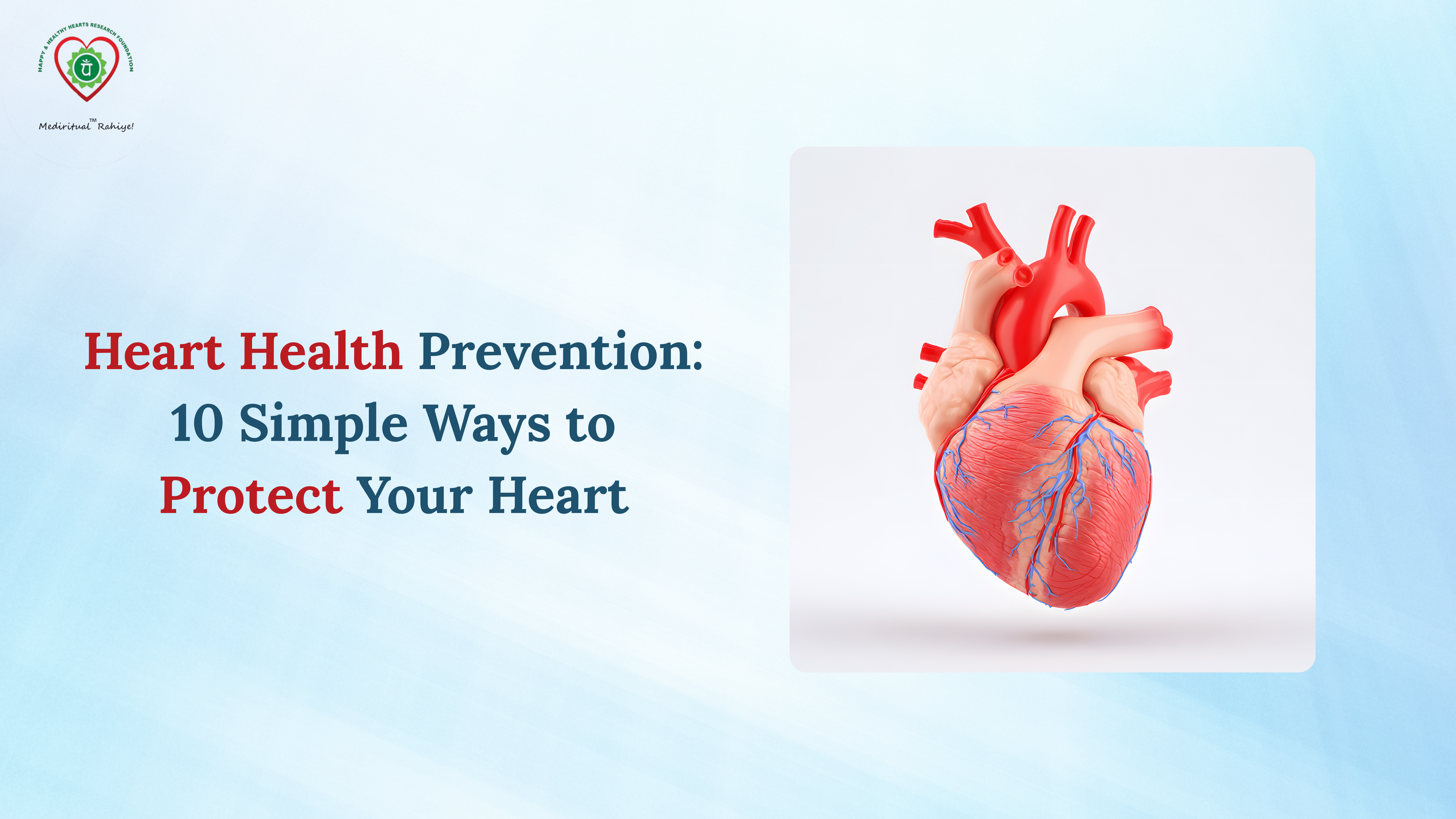
Heart disease continues to be one of the leading causes of death worldwide, but here’s the encouraging part — a large part of heart disease is preventable. While you cannot change some risk factors like age, genetics, or sex at birth, you can make simple lifestyle changes that protect your heart for the long run.
This guide covers practical, real-life heart-healthy measures you can start today, without perfection or extreme rules.
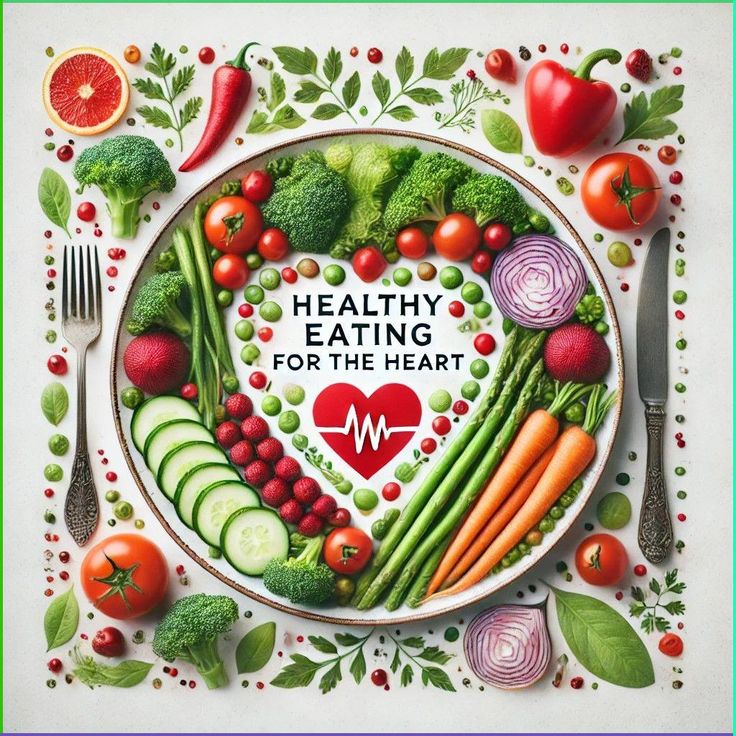
1. Make mindful dietary changes
What you eat shows up in your heart health.
- Try to keep salt intake below 1,500 mg a day to control blood pressure. Avoid packaged soups, chips, pickles, sauces, and processed foods.
- Reduce saturated fats found in fried food, bakery products, cream, butter, and red meat to prevent cholesterol buildup.
- Choose healthy fats instead — vegetable oils, nuts in moderation, seeds, and oil-based dressings.
- Add fiber-rich foods like fruits, vegetables, whole grains, sprouts, beans, and oats. Fiber helps control cholesterol and weight.
Small swaps like replacing namkeen with fruits or fried snacks with roasted chana go a long way.
2. Stay physically active
Movement is medicine for the heart.
- Aim for 150 minutes of moderate exercise weekly (brisk walking, cycling, dancing, swimming)
- OR 75 minutes of vigorous activity weekly
- Add resistance/strength training twice a week to support metabolism, weight, and blood pressure
Even 30 minutes of brisk walking daily can significantly lower your risk of heart disease.
3. Quit smoking and avoid tobacco completely
Smoking is one of the strongest risk factors for heart attacks.
The chemicals:
- damage arteries
- reduce oxygen to the heart
- increase blood clotting
The good news? The heart starts recovering within 24 hours of quitting. After one year, the risk of heart disease drops to almost half of a smoker’s risk.
Avoid second-hand smoke too — it is equally dangerous.
4. Limit alcohol intake
Moderate alcohol may improve HDL (“good cholesterol”), but excess alcohol raises blood pressure and harms the heart.
If you do not drink, do not start for health reasons. If you do, keep it within recommended limits and avoid binge drinking completely.
5. Maintain a healthy body weight
Weight around the abdomen especially increases risk of:
- high blood pressure
- diabetes
- high cholesterol
- heart disease
Risk thresholds:
- Men: waist size over 40 inches (101.6 cm)
- Women: waist size over 35 inches (88.9 cm)
Even losing 3–5% of body weight can improve blood sugar, cholesterol and triglycerides. Crash dieting is not required — consistency is.
6. Manage stress before it manages you
Chronic stress:
- increases blood pressure
- disturbs sleep
- leads to overeating, smoking or alcohol use
- worsens heart rhythm problems
Try:
- meditation
- yoga
- journaling
- spending time in nature
- music, art, hobbies
- therapy when needed
Your mental wellness directly supports your heart.
7. Get quality sleep
Poor sleep is linked to:
- obesity
- high BP
- diabetes
- heart attack
- depression
Aim for 7–8 hours of uninterrupted sleep.
Keep the bedroom dark, cool and screen-free before bed.
If you snore loudly or feel very sleepy during the day, get checked for sleep apnea, a major yet treatable heart risk.
8. Get regular heart health screenings
Many people have high blood pressure, diabetes or cholesterol without any symptoms.
Screen regularly for:
- blood pressure
- fasting sugar/HbA1c
- lipid profile
Young adults with risk factors should test yearly, and adults above 40 should definitely be screened.
Early detection saves lives.
9. Prevent infections and maintain oral health
Gum disease and certain infections can trigger inflammation in the body and increase heart risk.
- Brush and floss regularly
- Treat dental infections promptly
- Keep vaccinations updated (flu, pneumonia if advised)
10. Be extra proactive if heart disease runs in your family
A strong family history means you need:
- earlier screening
- stricter control of lifestyle habits
- active medical supervision
Genes load the gun, but lifestyle pulls the trigger — so prevention matters more than ever.
When to see a cardiologist urgently
Seek immediate help if you notice:
- chest pain or heaviness
- breathlessness
- sudden sweating
- jaw, arm or back pain
- unexplained fatigue
- palpitations
- fainting spells
FAQs on Heart-Healthy Lifestyle
1. Can heart disease really be reversed with lifestyle?
Lifestyle changes can reduce plaque progression, improve BP and sugar control, and dramatically lower risk — especially when started early.
2. How much exercise is too much?
Over-exercising without guidance can strain the heart. Gradually build up and consult a doctor if you have symptoms.
3. Is desi ghee good or bad for the heart?
Moderation is key. Excess saturated fat increases cholesterol. Replace with healthier oils when possible.
4. Does stress alone cause a heart attack?
Stress increases risk and triggers unhealthy behavior — combined, it can precipitate an attack in high-risk people.
5. Should everyone take heart supplements?
No. Supplements must only be taken under medical advice. Diet and lifestyle remain the foundation.
Final takeaway
Heart health is not about perfection — it is about consistent small choices.
Eat smart, move daily, sleep well, avoid smoking, and get regular check-ups.
Your heart will thank you for years to come.
Add new comment